Virgin Pulse · Platform strategy
Modular, scalable platform strategy
Virgin Pulse's Homebase for Health (HB4H) initiative aimed to transform its B2B2C wellness platform into a comprehensive health management solution spanning Wellness, Condition Management, Benefits Navigation, and Health Analytics. I directed the design strategy that made one platform work for all of it.
The challenge
One platform, many offerings
Virgin Pulse’s Homebase for Health (HB4H) initiative aimed to transform its B2B2C wellness platform into a comprehensive health management solution. The expanded offering included Wellness, Condition Management, Benefits Navigation, and Health Analytics.
Two challenges emerged: how to create a seamless and flexible user experience for diverse offerings while retaining user engagement and usability, and how to allow clients (employers) to configure their instance of the platform to their needs while maintaining design cohesion.
Leadership
Bringing teams together around a shared strategy
As Director of Product Design & Research, I led a multidisciplinary organization of designers, researchers, and data scientists, including managers.
To support a growing platform, I introduced a modular design strategy and integrated it into our design system. I secured funding for a dedicated design systems team and hired a frontend engineer to bridge design and engineering, helping ensure shared patterns could be implemented consistently across products.
This approach improved collaboration, reduced duplicated effort, and contributed to a 40% reduction in time to market.
- 20+ Designers, researchers, and data scientists led
- 40% Reduction in time to market
Approach
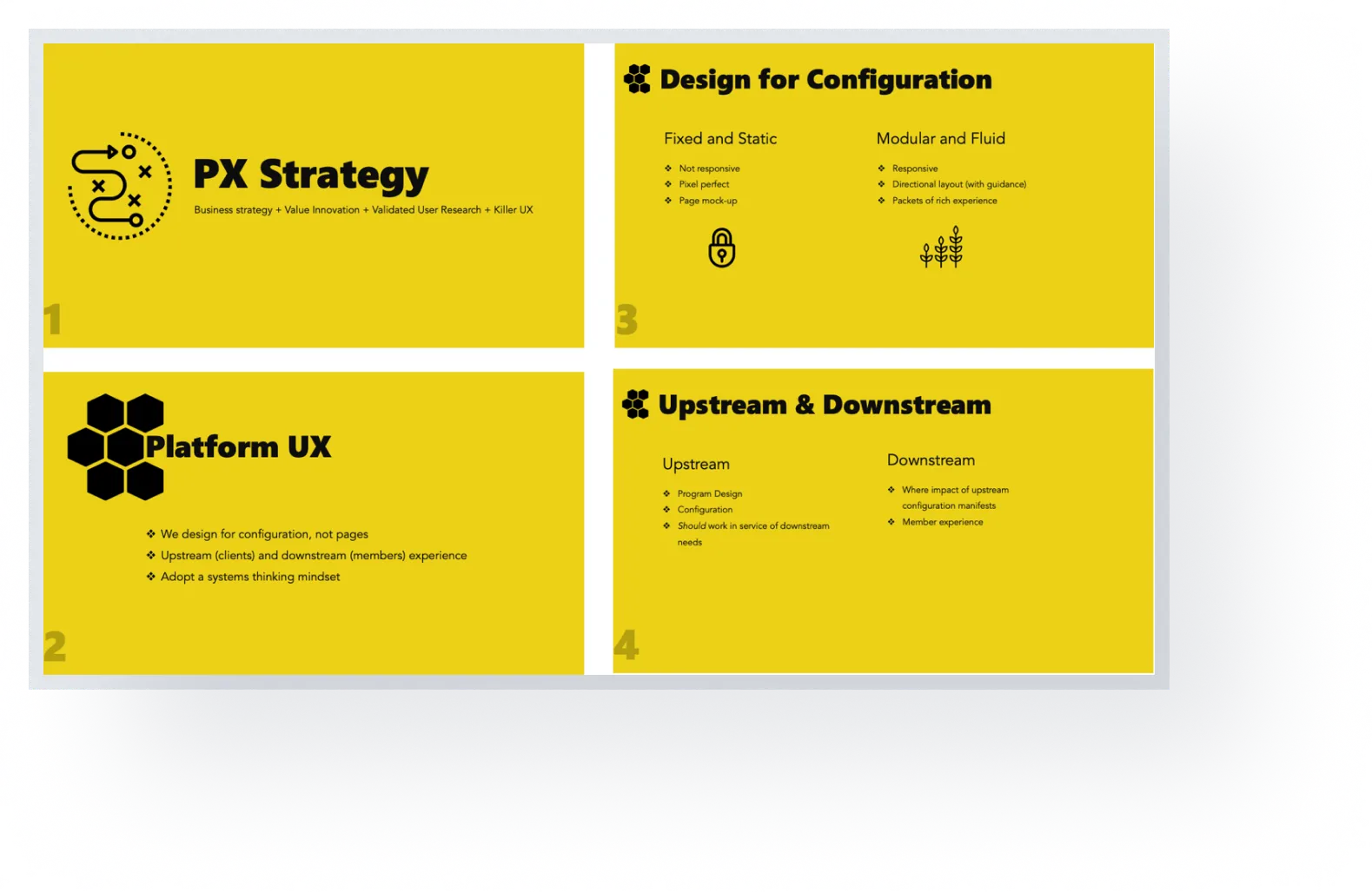
Design for configuration, not pages
Start with the member experience. Research with more than 200 members and stakeholder interviews helped us distinguish the needs of individual members from the configuration requirements of employer clients.
Create a flexible system. Rather than designing separate experiences for each employer offering, we developed a modular strategy that allowed the platform to adapt to different configurations while maintaining a consistent experience.
Validate the interaction model. We explored multiple concepts for navigation, daily tasks, and company announcements, testing the underlying structure before refining individual features.
Refine through iteration. Working closely with Product and Engineering, we used prototypes and customer feedback to establish a cohesive experience across digital touchpoints.
Outcomes
A configurable platform that holds together
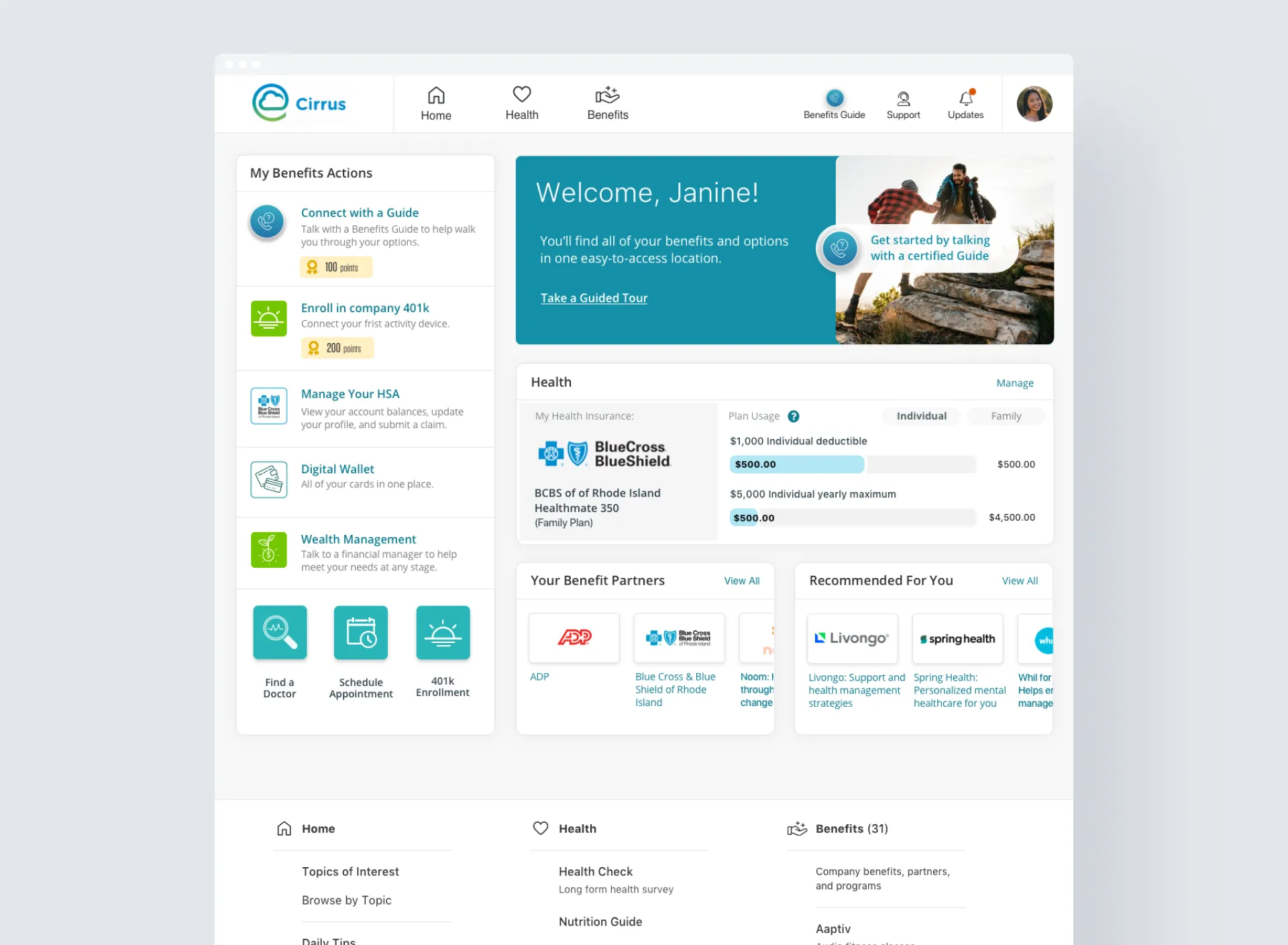
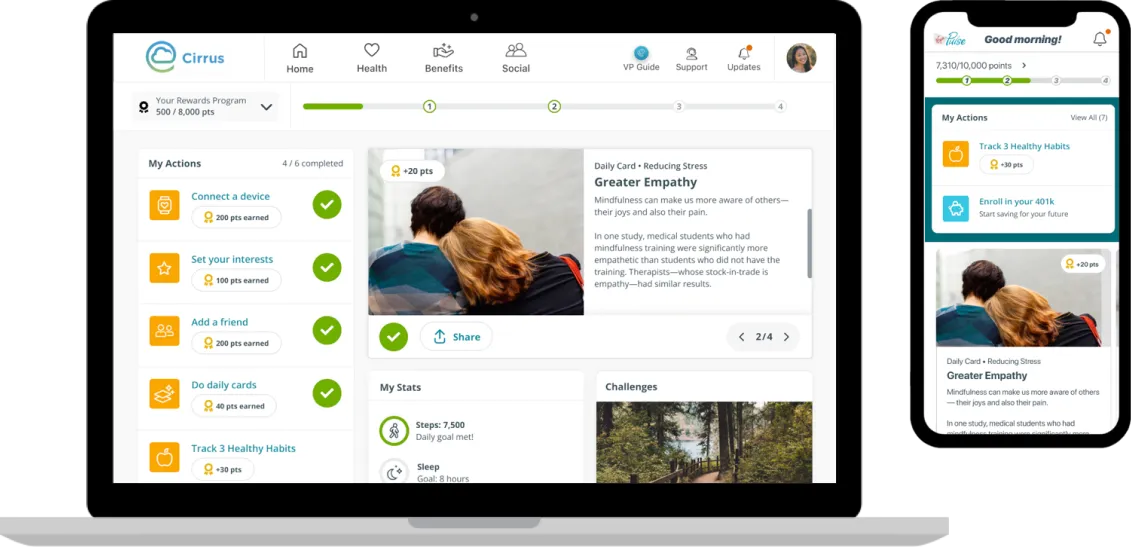
A highly configurable platform — Launched with support for Virgin Pulse’s expanded offerings while maintaining a consistent and engaging user experience.
A scalable modular system — The modular design strategy streamlined client onboarding and allowed for rapid customization without breaking the design.
A cohesive front door — Connected users to the full range of HB4H services, and kept them on track with rewardable tasks available to complete.
By making modular design part of our shared design system and establishing a dedicated team to maintain it, we created a more consistent, scalable approach to product development. This contributed to a 40% reduction in time to market while supporting the platform’s expanding range of health and wellbeing services.
Service design blueprint
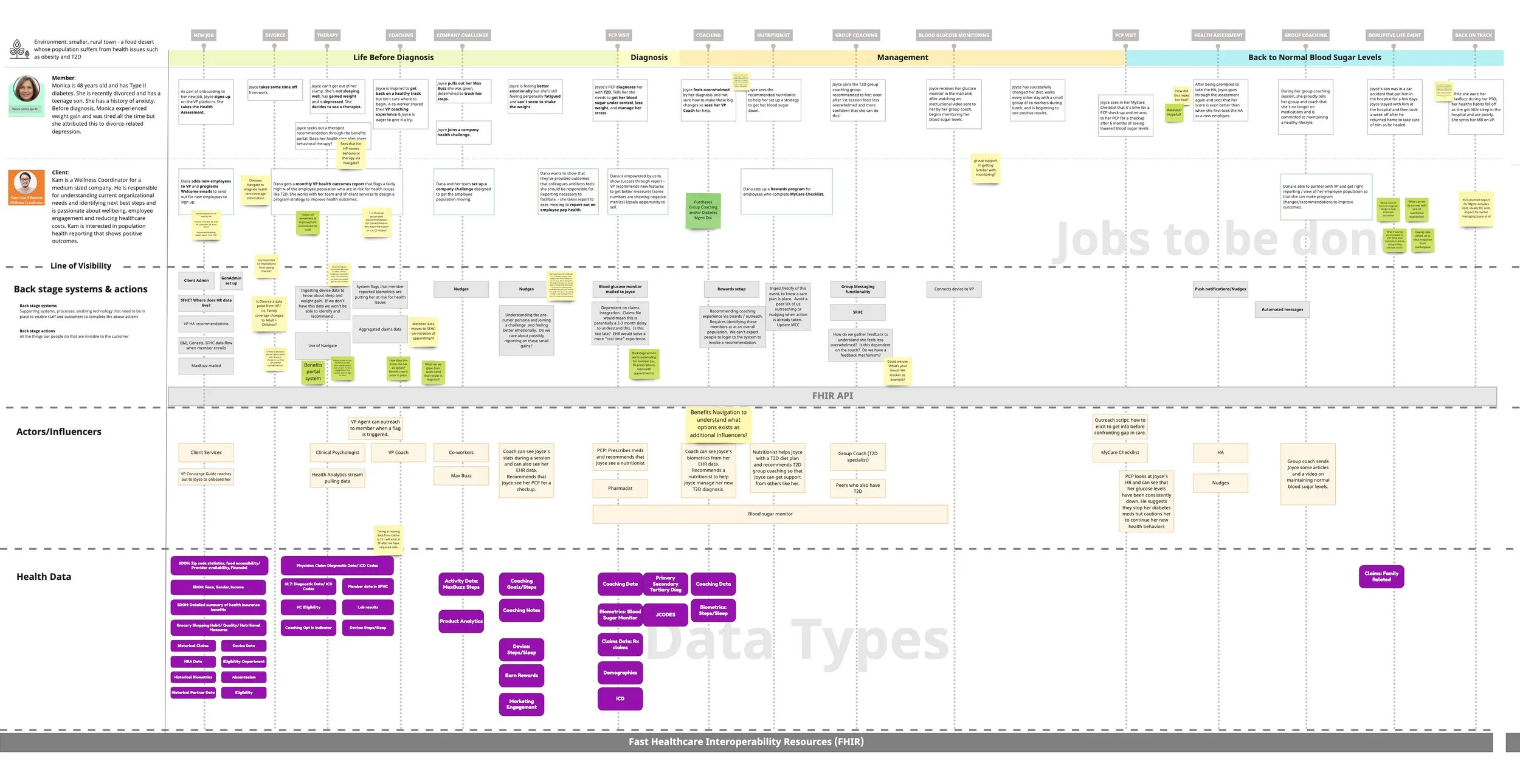
Health Continuum: connecting experiences through data
As Virgin Pulse expanded beyond wellness into health and condition management, we needed a more patient-centered approach to integrating health information into the platform.
Engineering was working through how to architect a data model that could map health information using FHIR. A Product Director asked me to help clarify the requirements from a member experience perspective.
I created a service design blueprint mapping the member journey, the information needed at each stage, and the relationships between data and experiences. This gave engineering a shared view of the requirements and helped inform the platform’s data architecture.